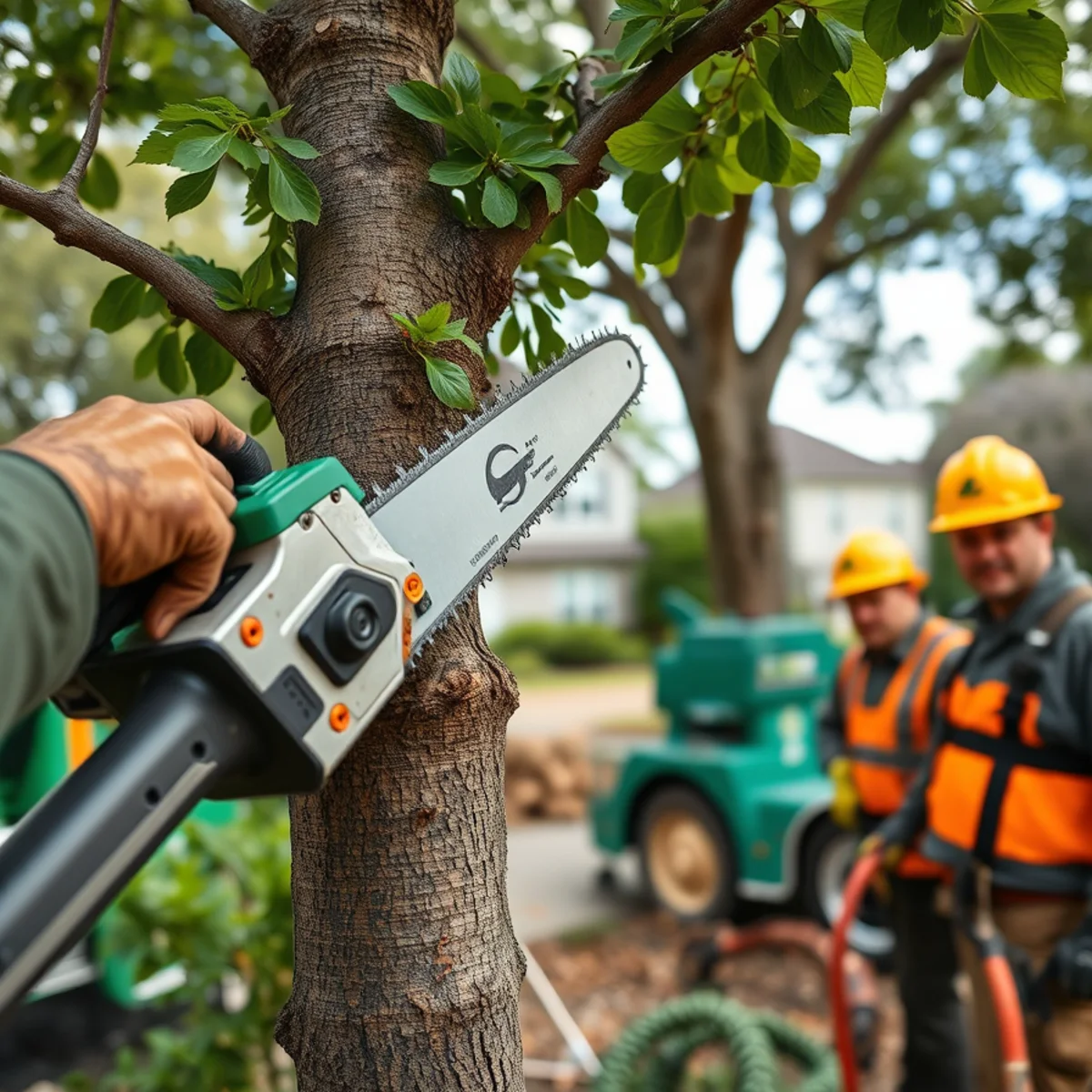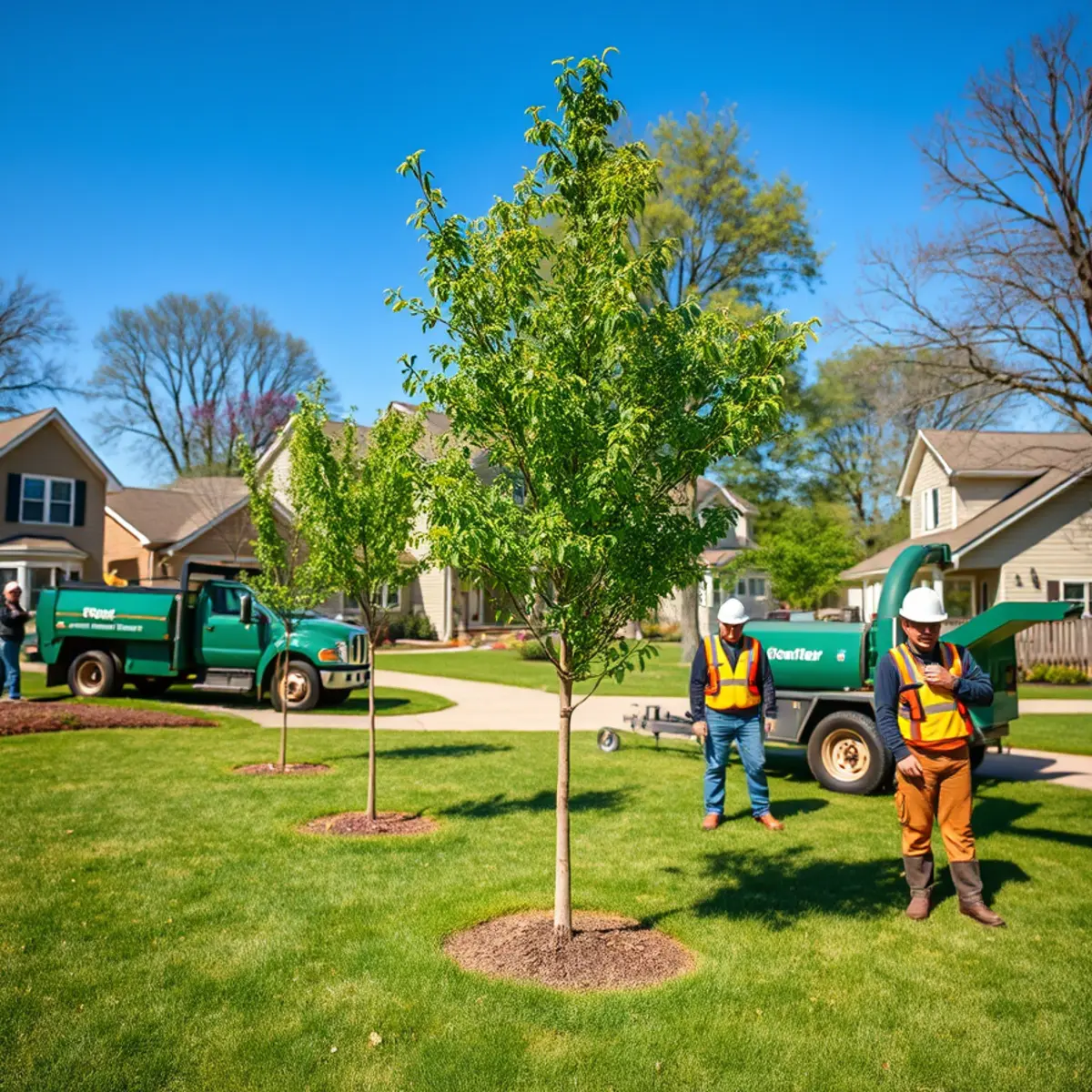
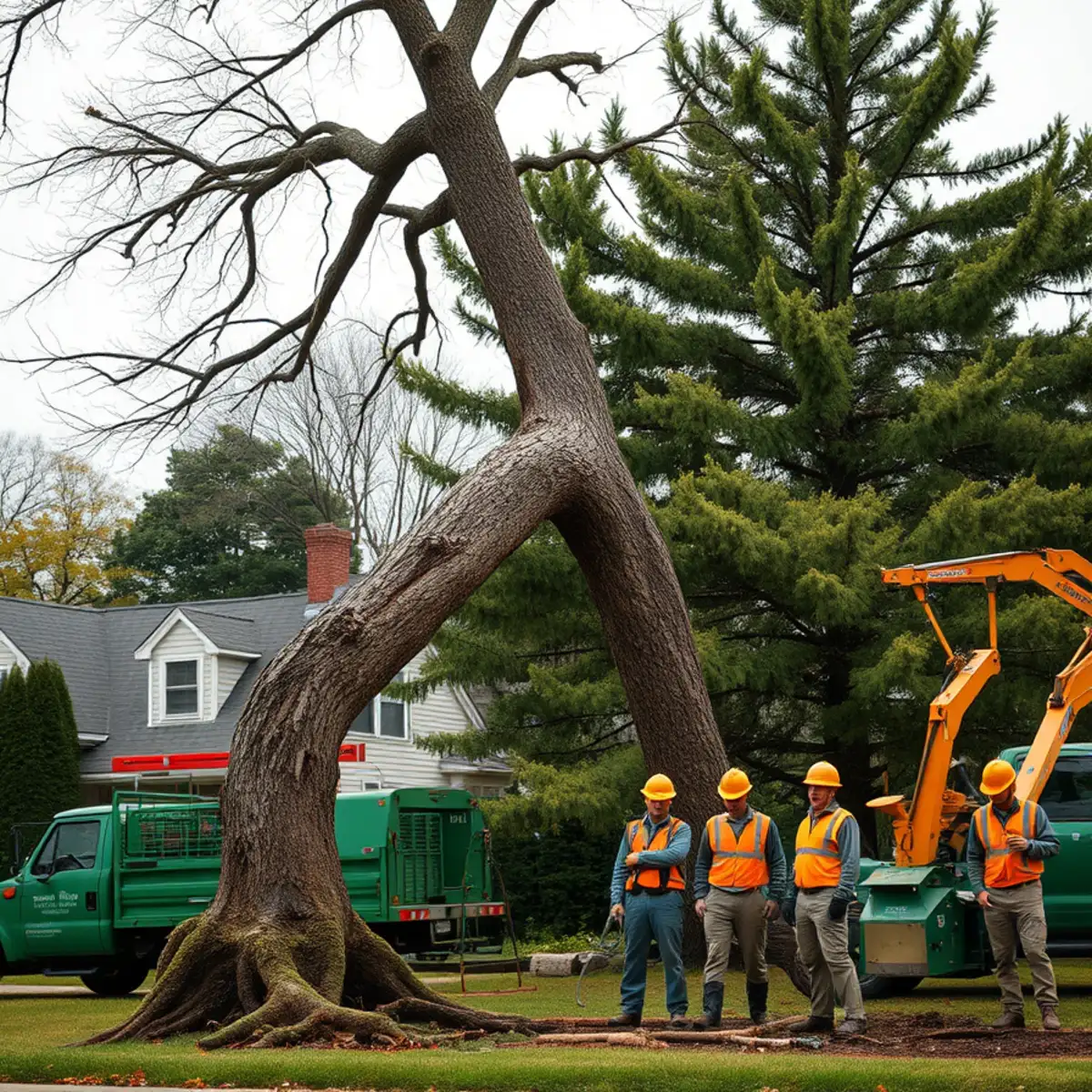
A tree usually tells you it's in trouble before it fails. The problem is most folks don't know what to look for — until a limb is through the shed roof. Some warning signs mean "keep an eye on it," and some mean "call now."
Here are seven that tell us a tree may need to come down before it comes down on its own.
1. The tree is dead — or more than half gone
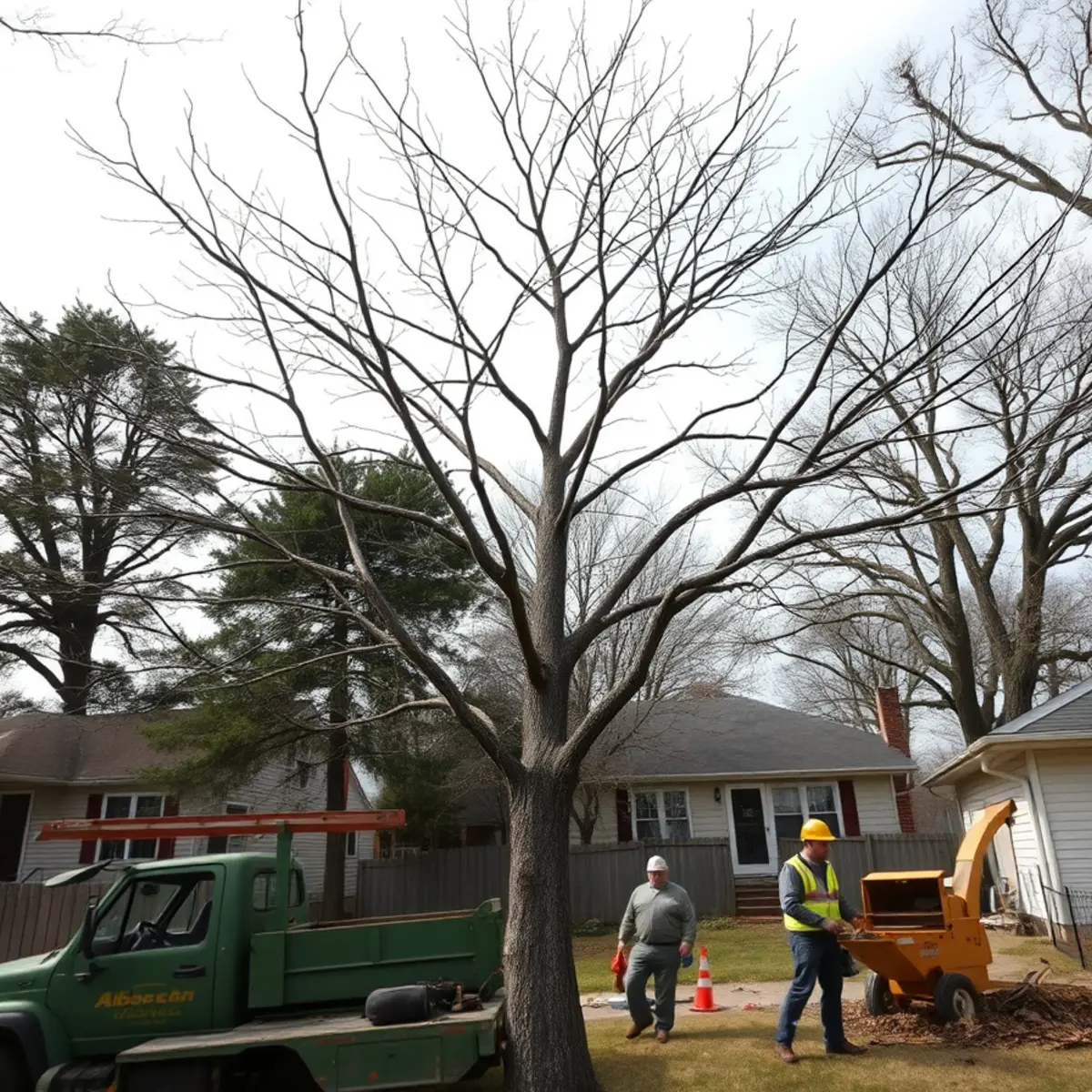
No leaves in summer, brittle bare branches, bark sloughing off in sheets. A dead tree isn't stable — it's decaying, and it gets more brittle and unpredictable every season.
Across Mid-Michigan, the most common version of this is the ash tree killed by emerald ash borer. Look for D-shaped exit holes in the bark, pale "blonding" where woodpeckers stripped the bark to reach the larvae, and thinning that starts at the top. Dead ash go dangerously brittle fast, so we don't recommend waiting on them.
2. Big dead limbs over something you care about
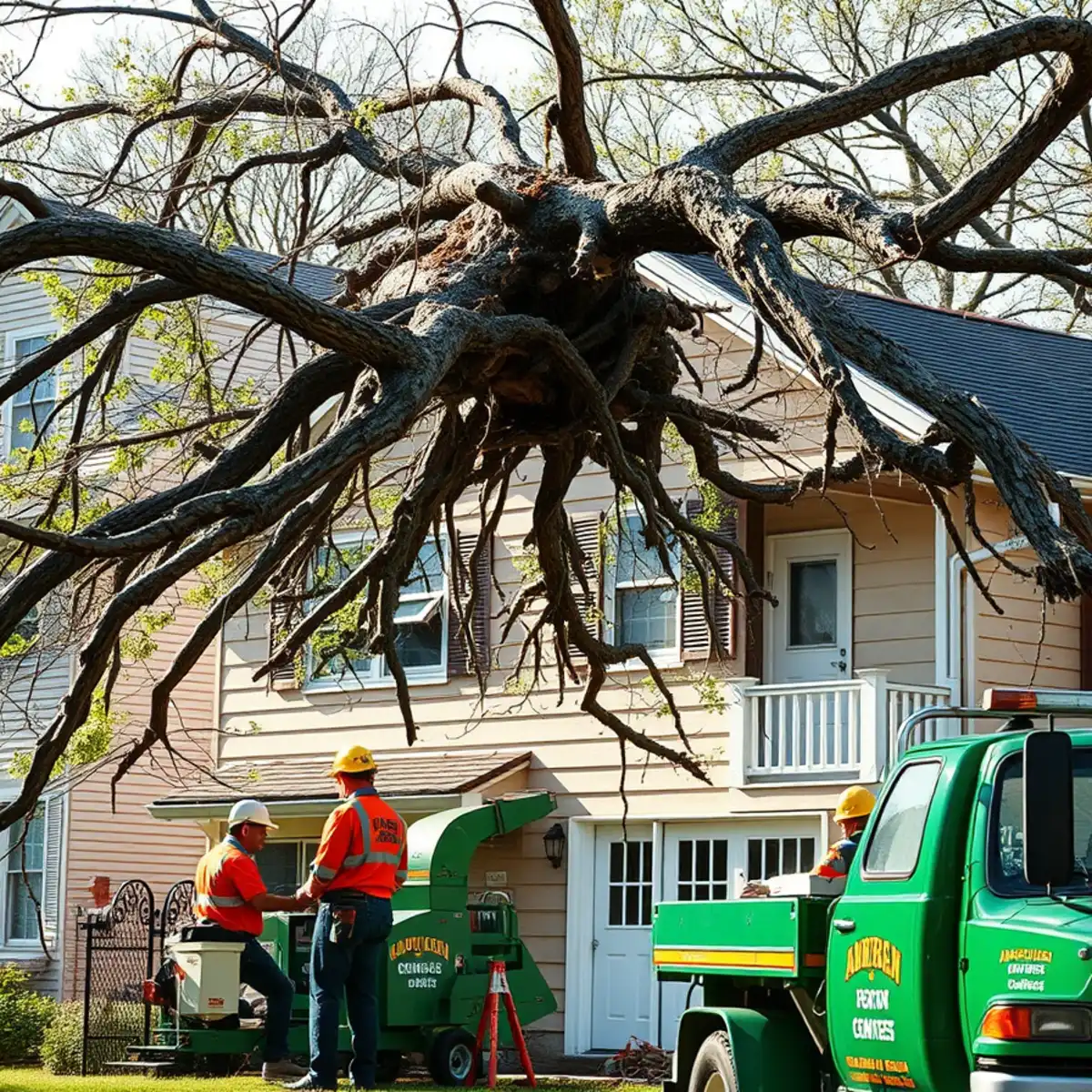
Even a healthy tree can carry deadwood. A large dead branch over the driveway, the deck, or the kids' swing set is a "when," not an "if."
Sometimes the fix isn't removal at all — it's pruning out the deadwood. But big dead limbs high in the canopy, especially on mature oaks and maples, are worth a look sooner rather than later.
3. A lean that's new or getting worse
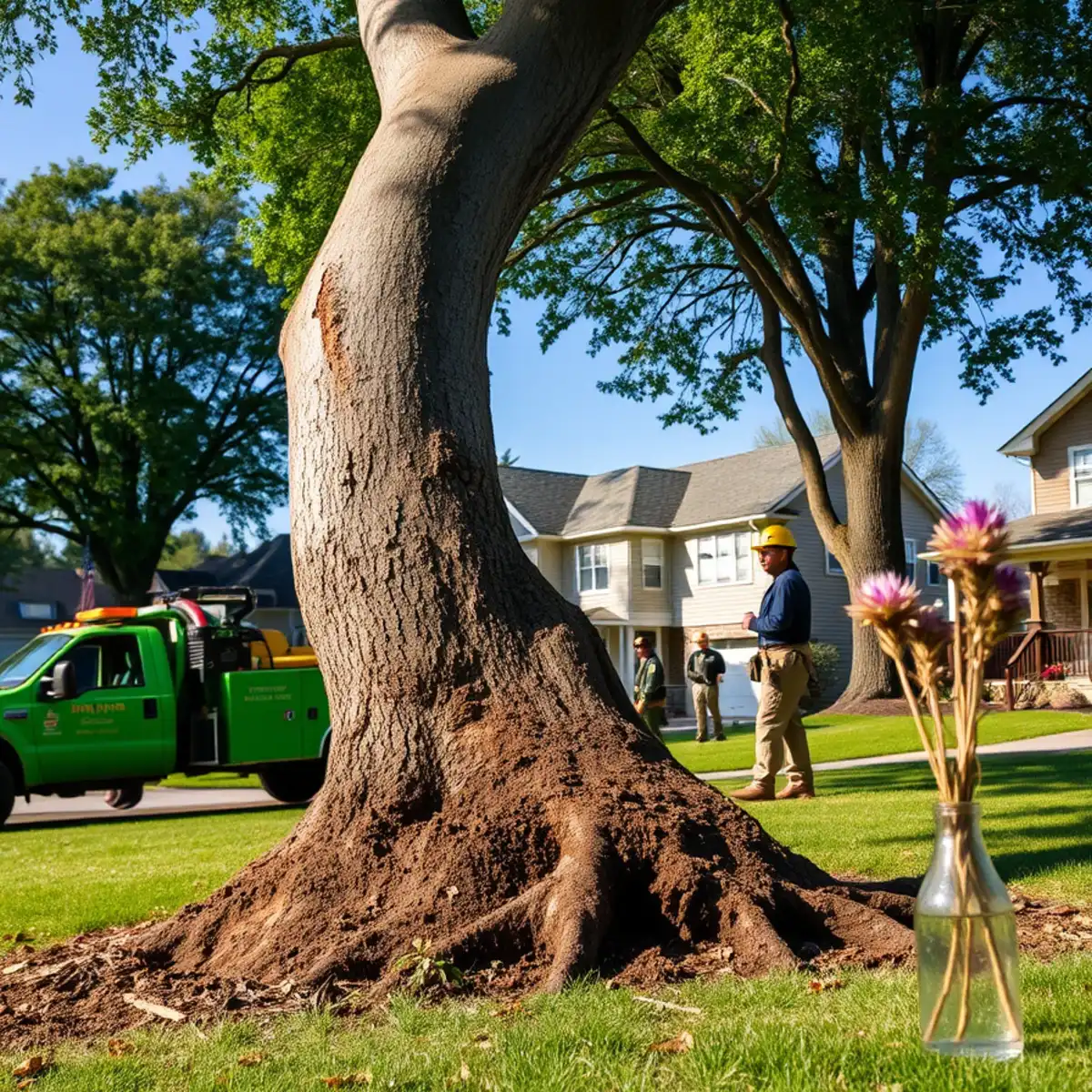
Plenty of trees grow at an angle and stand for decades. The one that worries us is a new lean, or one that's increasing — especially with cracked or heaving soil on the back side of the root plate.
That's the sign a tree is starting to uproot. After a wet spring thaw or a big storm, when the ground is saturated, a sudden lean means call right away.
4. Cracks, splits, and bad unions
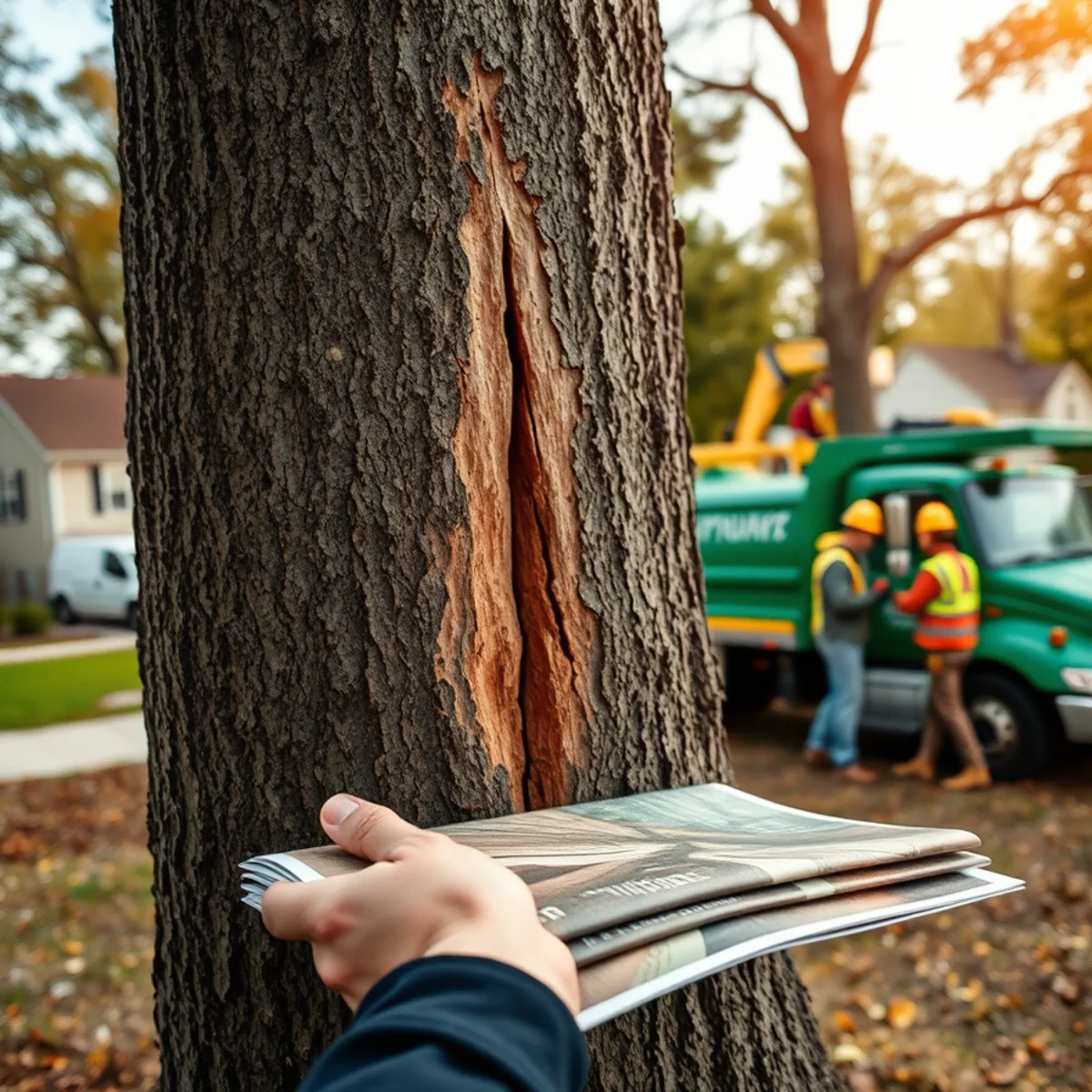
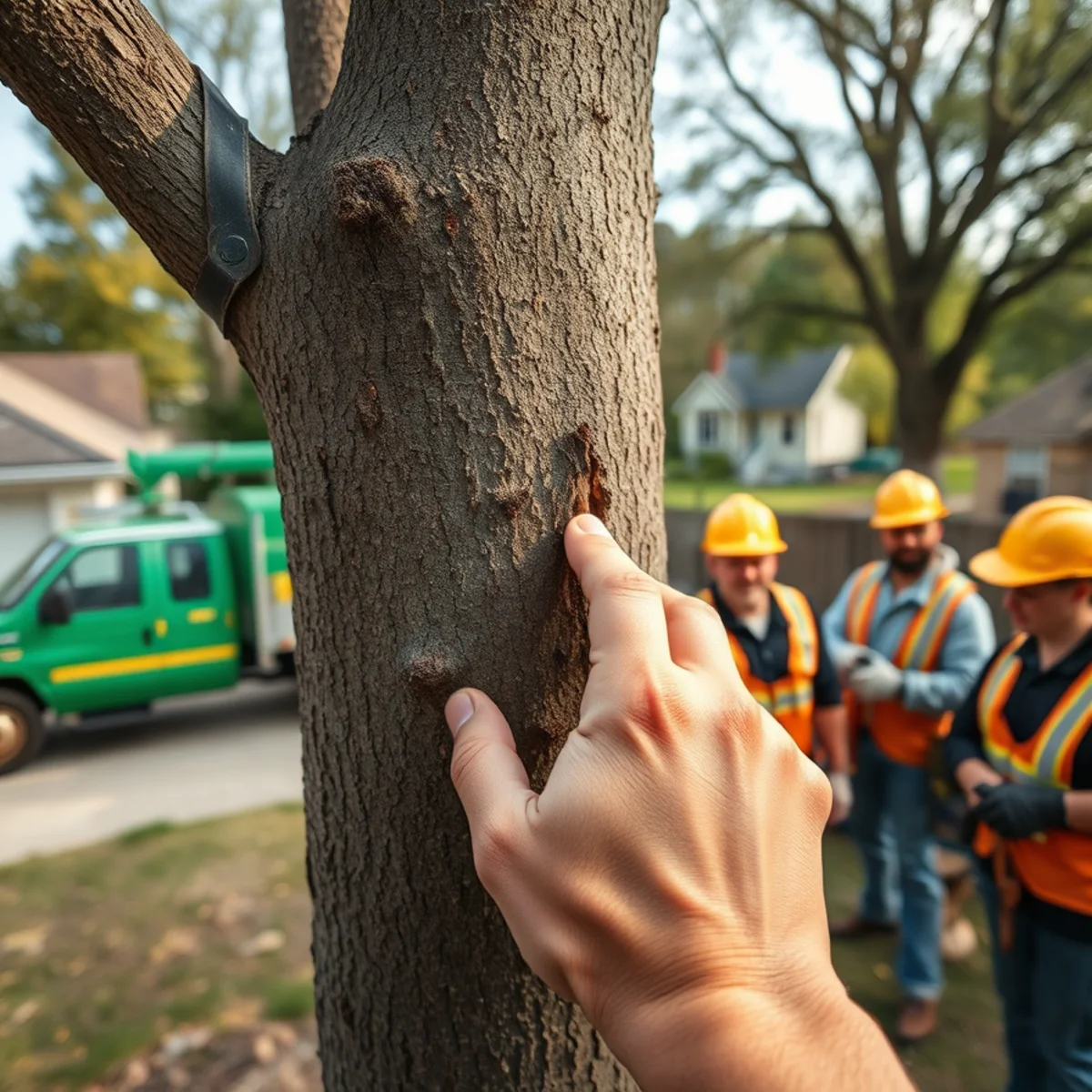
Vertical cracks in the trunk, a split where two big stems meet, or "included bark" — bark pinched inside a tight V-shaped union instead of solid wood — are all structural weak points. Our freeze-thaw swings also open frost cracks on thin-barked trees.
A single deep trunk crack can mean the tree is failing from the inside. Sometimes a valuable tree with a weak union can be supported with cabling and bracing instead of removed — but that's a call for a trained eye, not a guess.
5. Mushrooms, fungus, or a hollow trunk
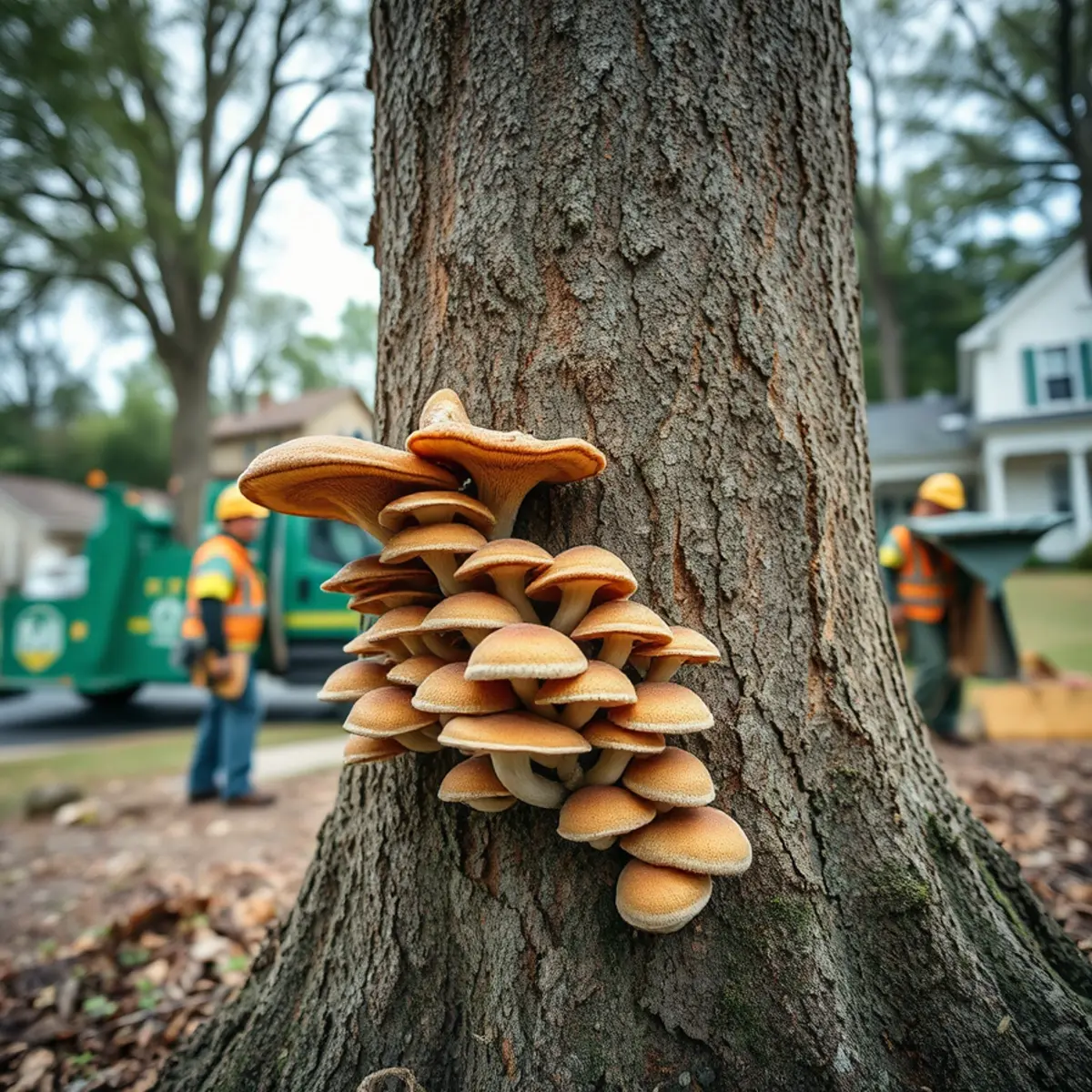
Mushrooms or shelf-like conks growing at the base or along the trunk usually mean decay inside — the wood you can't see. A hollow that echoes when you knock, soft or crumbling wood, and a spongy base are all red flags.
A tree can hold a surprising amount of hollow and still stand. Or it can be a shell ready to go. Guessing which is risky, and that's exactly where a real assessment earns its keep.
6. Root problems
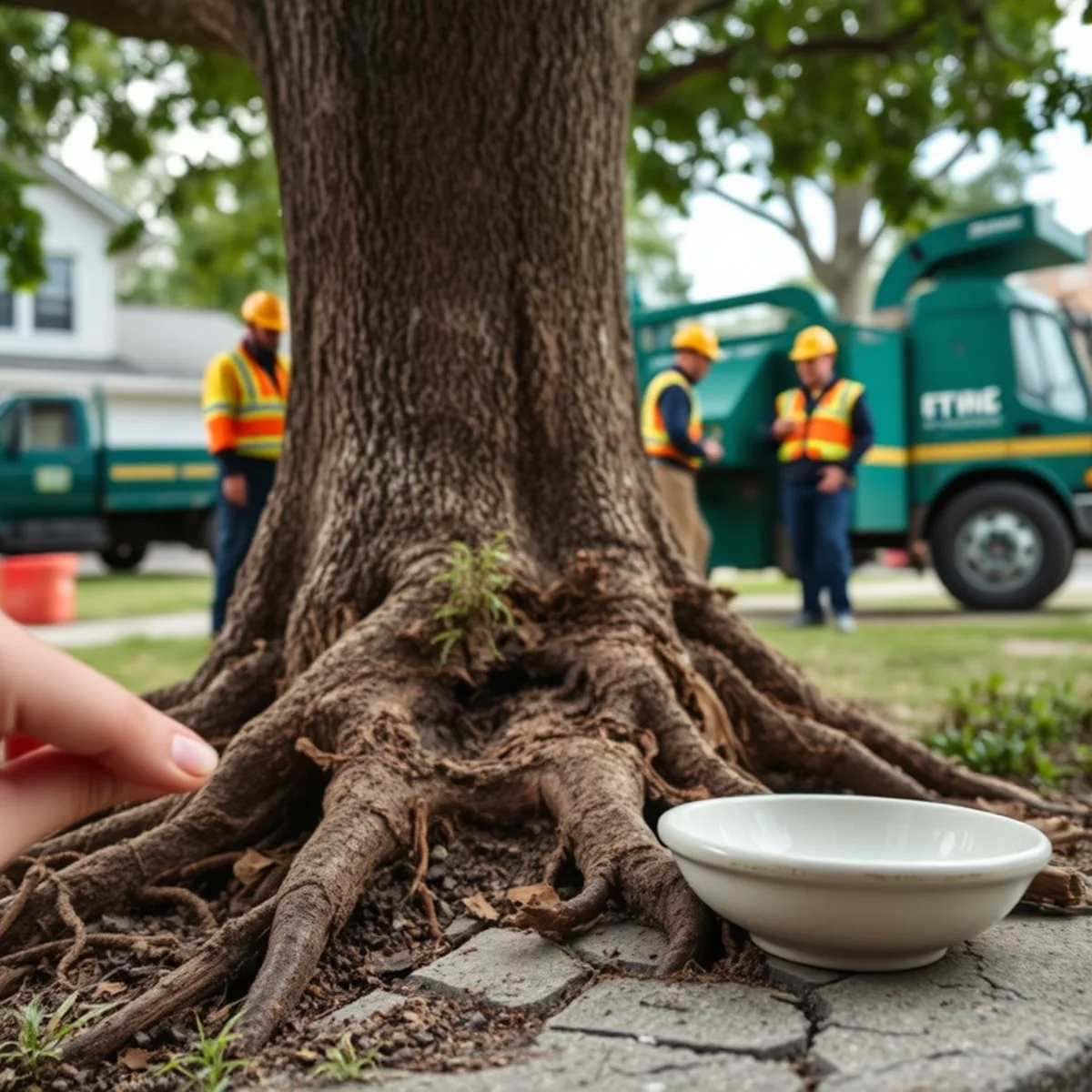
The roots hold the whole thing up, so trouble down low is serious. Watch for heaving or cracked soil near the base, roots severed by recent digging or construction, mushrooms along the root flare, or a trunk that plunges straight into the ground like a telephone pole with no visible flare.
Root and butt rot are hard to spot and dangerous, because a tree with failing roots can go over with very little warning.
7. Right tree, wrong place
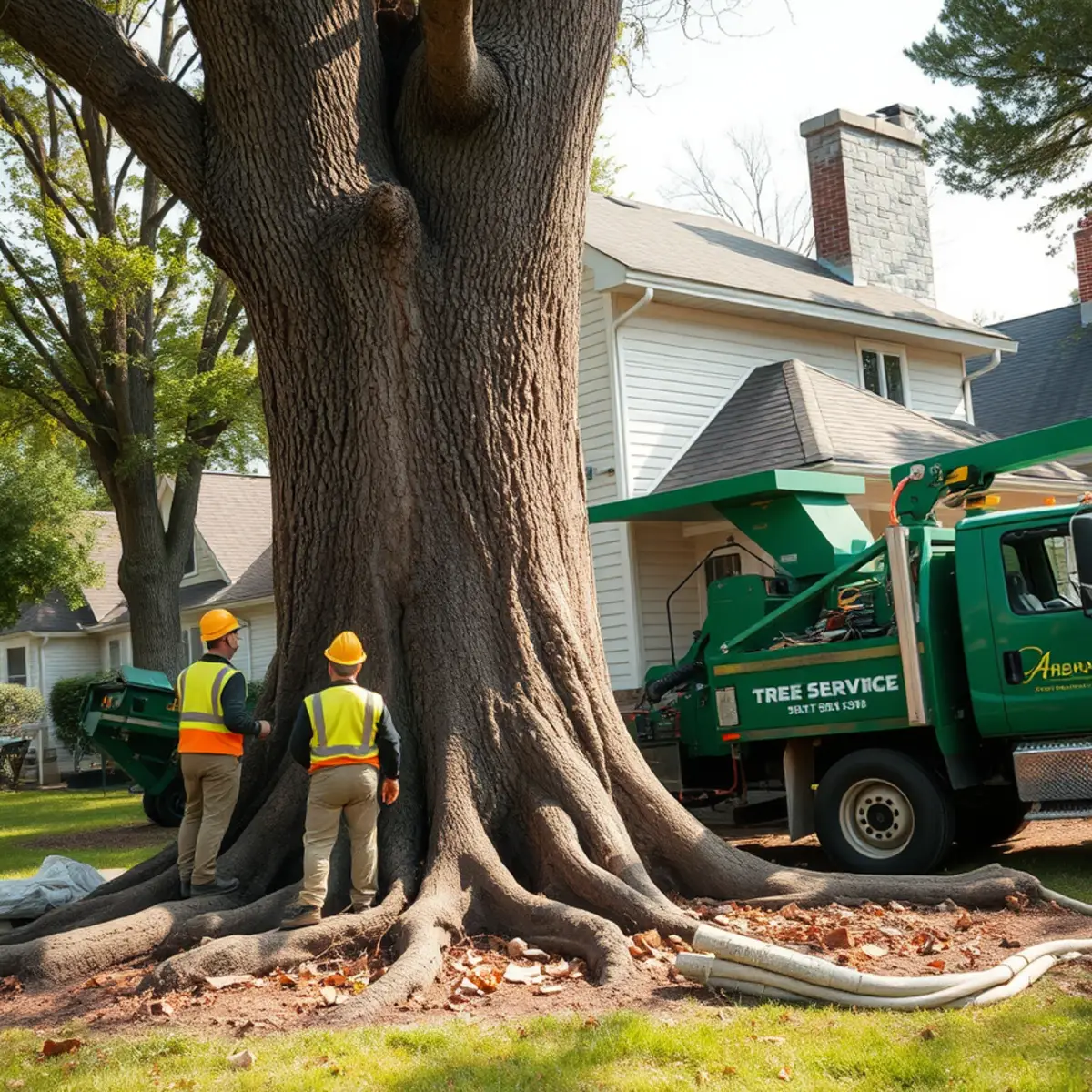
Sometimes the tree is healthy — it's just in the wrong spot. A fast-growing silver maple or cottonwood with brittle wood hanging right over the house. Roots lifting the driveway. A big tree crowding the foundation or the septic field.
It's worth honestly weighing whether that tree belongs there for the long haul.
A quick check you can do after every storm
You don't need to be an arborist to catch the obvious stuff. After a big blow, walk the yard and look up.
Scan each big tree for hanging or snapped limbs caught up in the canopy — the ones we call widowmakers, because they can drop long after the storm has passed. Check the ground at the base for fresh cracks in the soil or roots that look lifted. Look over the trunk for new splits, and at the unions where big stems meet. And note anything that's changed since last time — a tree that's suddenly leaning, or a limb hanging lower than it used to.
Photograph what you find. If two or three of these show up on the same tree, don't wait it out — that's the one to have looked at first.
When a tree can be saved instead
Not every problem tree needs to come down. Deadwood can be pruned. A weak union can sometimes be cabled. An early disease or pest issue might be treatable. We'd always rather save a good tree than remove it.
But safety comes first. If a tree is a genuine hazard to people or the house, removal is the honest answer.
How we make the call
When we come out, we look at the whole picture: the species, the size and health of the canopy, the trunk and root flare, what's underneath the tree, and how it has changed over time. For anything you're unsure about, an arborist consultation and tree risk assessment gives you a straight answer before there's a problem.
When a tree does need to go, our crew handles tree removal cleanly and safely, right down to the stump. We do this all over the area — Holt, Mason, and the surrounding towns.
Not sure about a tree? Let's take a look.
If a tree in your yard is giving you a bad feeling, trust it — and let us confirm. We're family-owned, licensed and insured, and we'll tell you straight whether it needs to come down or whether it's got good years left in it. Call us at (208) 635-2100 for a free, no-obligation estimate.
Frequently asked questions
Written by
Hayworth Tree Service