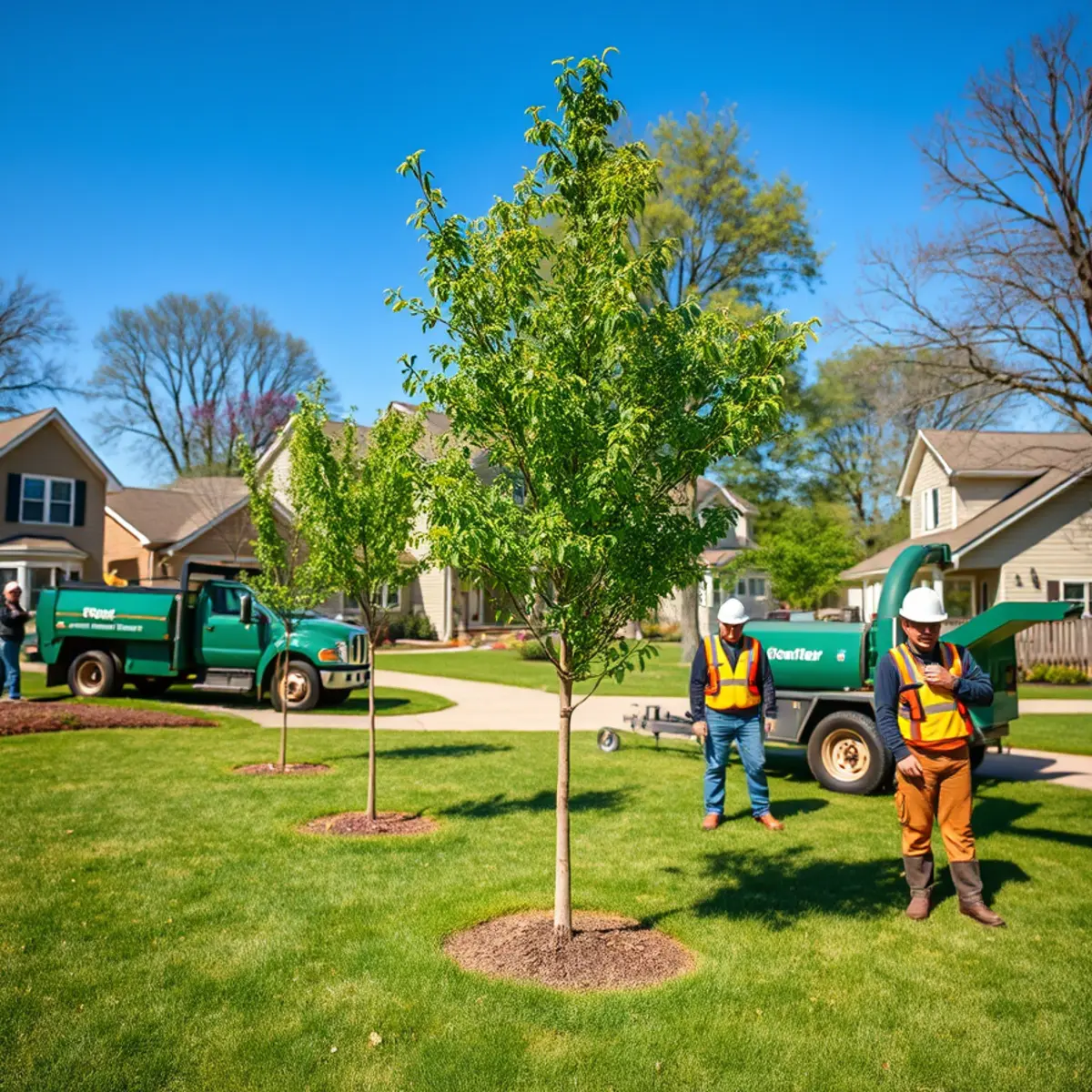
Planting a tree is one of the best things you can do for your property. Shade in summer, color in fall, value at resale, and a windbreak against those lake-effect winters. But plant the wrong tree — or the right tree in the wrong spot — and you're buying yourself decades of headaches: weak wood, disease, roots in the wrong place, or a species that won't take our winters at all.
Here's what we plant, what we steer people away from, and how to give a young tree its best shot in Mid-Michigan.
Start With Native and Hardy
Most of Mid-Michigan sits in USDA hardiness zones 5 and 6. Native trees evolved right here, so they shrug off our cold, our clay, and our swings between drought and downpour better than anything shipped in from a milder climate. Native trees also feed native birds and pollinators. When in doubt, plant native.
Best Shade Trees for Michigan
Sugar and red maple
You can't go wrong with our native maples. Sugar maple gives you that classic orange-and-red fall show and dense summer shade. Red maple is more tolerant of wet ground and a little faster to fill in. Both are strong, long-lived, and built for our climate.
Oaks — worth the wait
Red oak, white oak, and bur oak are some of the toughest, most valuable trees you can put in the ground. They grow slower, but they live for generations and hold up in wind and ice.
One Michigan rule comes with oaks: only prune them between November and March. Oak wilt spreads through fresh cuts made in the growing season, so plant your oak, then keep the saw away from it until winter.
Other solid shade picks
American hornbeam (ironwood) and hackberry are underused, tough, and well-behaved near buildings. For a fast start, red maple beats the weak-wooded alternatives below.
Evergreens That Actually Do Well Here
For year-round green and a winter windbreak, stick with species that hold up long-term:
- Eastern white pine — our state tree, soft and fast-growing where it has room.
- White spruce — dense, cold-hardy, and more disease-resistant than blue spruce.
- Concolor (white) fir — a handsome, reliable choice with soft blue-green needles.
A quick word on Colorado blue spruce: everybody loves the color, but around here they tend to decline with age, hit by needlecast and canker diseases. If you want that look, white spruce or concolor fir will serve you far better.
Smaller Trees for Tight Spots
Not every yard needs a giant. For under power lines, near patios, or by the front walk:
- Serviceberry — spring flowers, summer berries the birds love, good fall color.
- Eastern redbud — pink spring blooms; happiest in the warmer, southern half of the state and a sheltered spot up here.
- Hawthorn and flowering crabapple — pick disease-resistant varieties for the best results.
What to Avoid — and Why
Some trees cause more trouble than they're worth in Michigan:
- Ash — do not plant ash. Emerald ash borer will find it. If you've got a mature ash worth saving, that's a job for tree disease and pest treatment, not a reason to plant more.
- Silver maple and cottonwood — fast, but brittle and shallow-rooted. Great way to end up with limbs on the roof and roots in the sewer line. Keep them far from buildings, if at all.
- Norway maple — invasive, and it casts such dense shade that nothing grows beneath it.
- Callery (Bradford) pear — weak-crotched, short-lived, invasive, and it splits apart in our storms.
Give Your New Tree a Strong Start
The best species will still fail if it's planted wrong. A few basics go a long way.
Plant at the right time and depth
Early fall or spring is ideal. Set the tree so the root flare — where the trunk widens into roots — sits right at ground level. Planting too deep is one of the most common reasons young trees quietly struggle for years.
Mulch and water
Ring the tree with two to three inches of mulch, pulled back from the trunk — no "mulch volcano" piled against the bark. Then water deeply and regularly through the first two summers while the roots establish. That first season or two makes or breaks a young tree.
Right tree, right place
Look up before you dig. Keep large shade trees clear of power lines and well away from the foundation, and picture the mature spread, not the sapling. Getting placement right the first time saves you from fighting the tree — or removing it — down the road.
If you'd rather not guess, our tree planting and transplanting puts the right species in the right spot for your soil and setting. And a little early structural pruning and shaping in the first few years builds strong form that pays off for decades. We help homeowners choose and plant trees all around DeWitt and St. Johns.
Plant Once, Plant Right
A tree is a long game. The species you choose today is one your family will live with for thirty, fifty, a hundred years — so it's worth getting right.
If you're deciding what to plant or where to put it, call us at (208) 635-2100 for a free estimate. We're family-owned, licensed and insured, and we're glad to point you toward the trees that thrive here.
Frequently asked questions
Tree service near you
Written by
Hayworth Tree Service