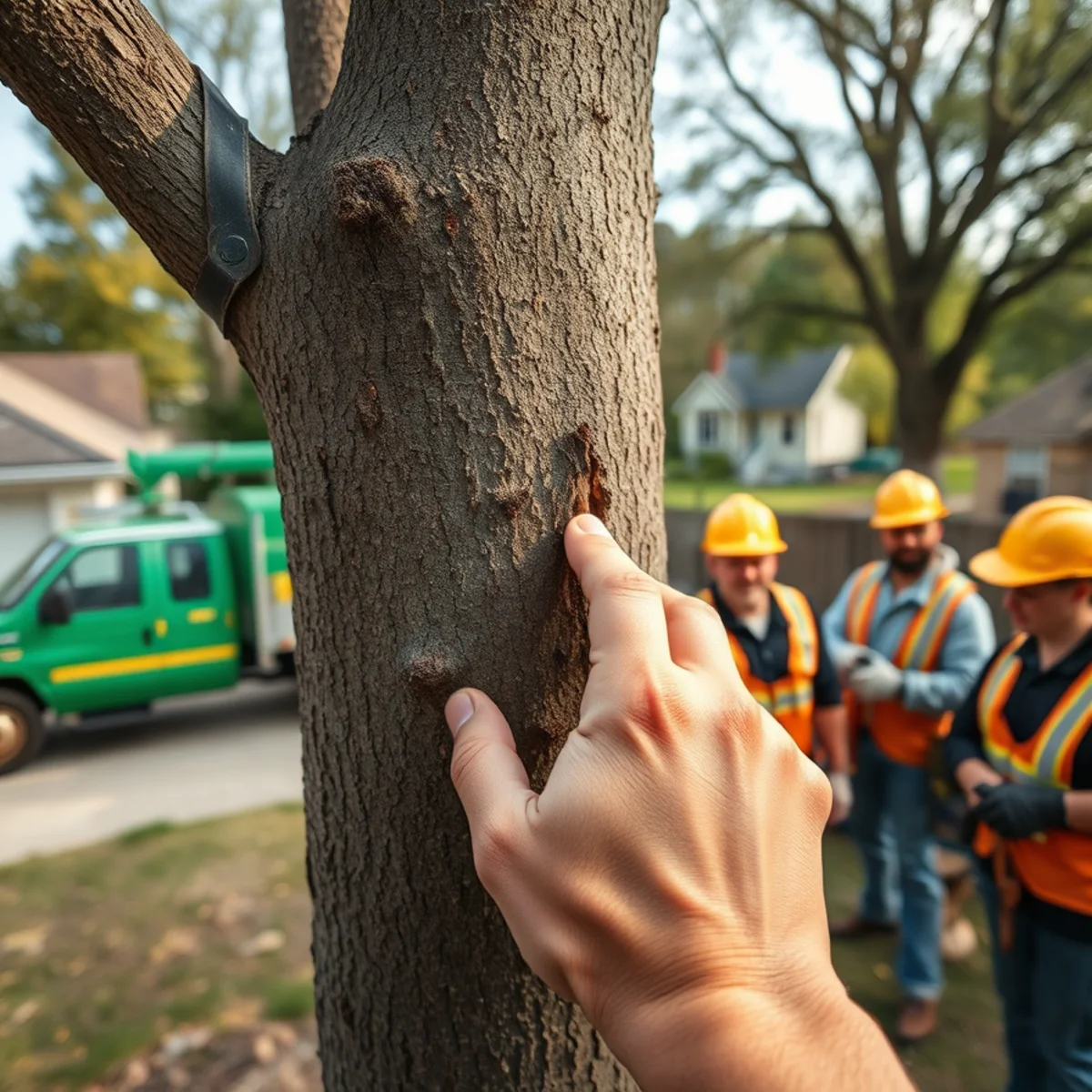
Every spring we get the same call: the neighbor's trees leafed out weeks ago, and yours is still standing there bare. Is it dead, or just slow? It's a fair question — and an important one, because a truly dead tree near your house isn't just an eyesore. It's a hazard that gets more dangerous every month you leave it.
Here's how to check your tree yourself, and how to tell dead from merely dormant.
First: Dead or Just Dormant?
In Michigan, timing throws people off. Our winters are long, and some trees leaf out much later than others. A bare tree in April isn't necessarily a dead one.
Before you panic, know your species. Oaks, black locust, and some ash hold off well into spring. After a hard winter or a rough ice storm, give a tree until late May or early June to show its hand before you call it. What you're doing in the meantime is gathering evidence.
Simple Tests You Can Do Yourself
The scratch test
This is the quickest, most reliable check. Pick a twig or small branch and scratch off a little bark with your thumbnail or a pocketknife.
- Green and slightly moist underneath — that tissue is alive.
- Brown, dry, and brittle — that part is dead.
One dead twig doesn't condemn the whole tree, so test several branches at different heights and on different sides. If everything you scratch is brown and the trunk scratches brown too, that's a bad sign.
The bud and bend test
Living branches carry buds, and living twigs bend before they break. Run your hand along a few branch tips. Supple twigs with plump buds mean life. Twigs that snap off dry and hollow, with no buds, mean that section is gone.
Look at the bark and trunk
Healthy bark is generally tight to the wood. Warning signs include:
- Large patches of bark peeling or falling away to reveal smooth, dead wood underneath.
- Deep cracks, hollows, or soft, crumbling wood.
- Mushrooms or shelf-like fungus (conks) at the base or on the trunk — often a sign of internal decay.
Check for cause and lean
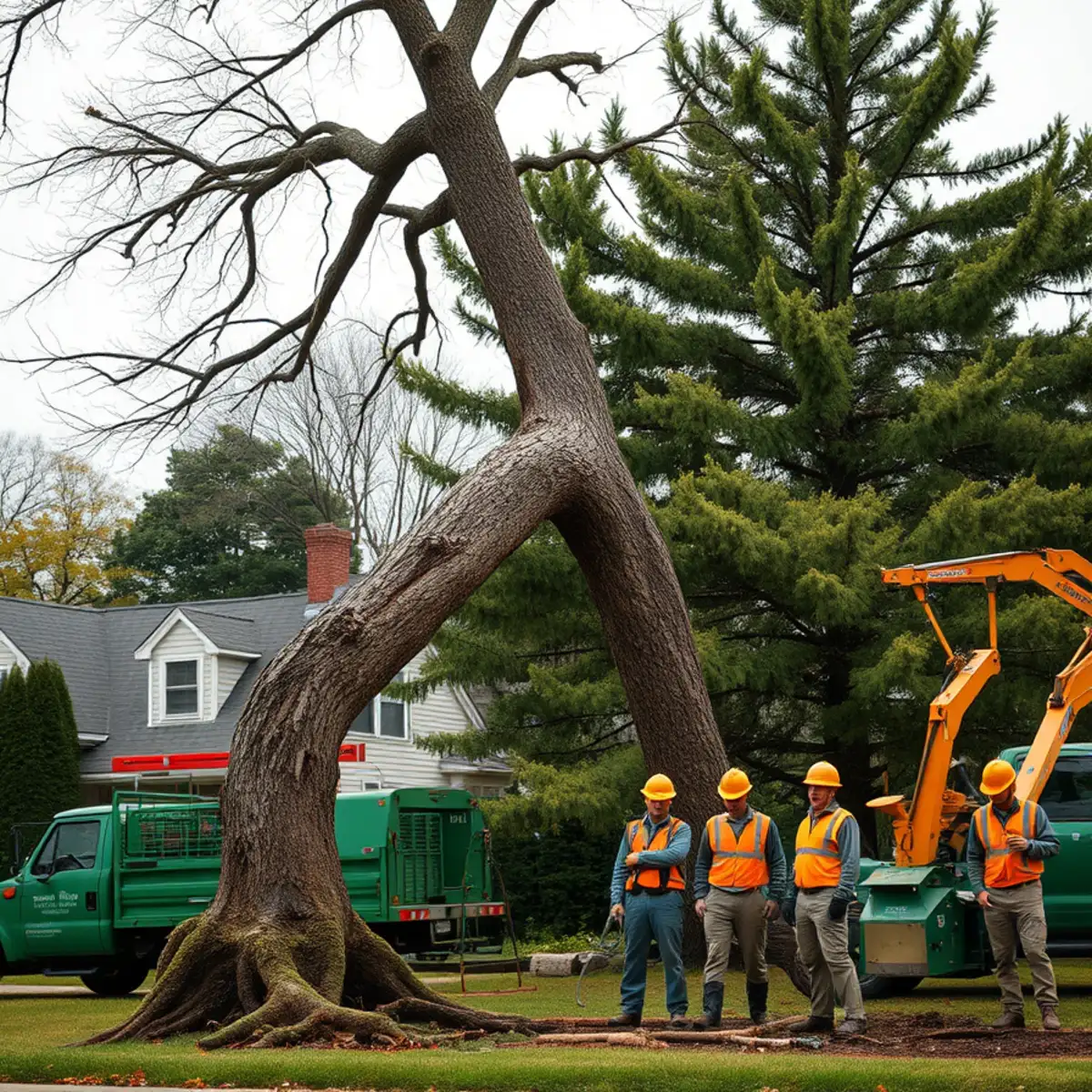
A tree that's leaning more than it used to, with soil heaving or roots lifting on one side, may have a failing root system — dead or not, that's a safety problem. And look for the cause: D-shaped holes and top-down thinning point to emerald ash borer on an ash; sudden summer browning on an oak can mean oak wilt.
Whole Tree, or Just Part of It?
Not every struggling tree is a lost cause. It matters a lot whether you're looking at a fully dead tree or a mostly healthy one with some dead limbs.
If the trunk and roots are sound and only certain branches are dead, the tree can often be saved. Clearing out the deadwood with proper pruning removes the hazard, opens the canopy, and lets the tree put its energy where it counts. Sort out the underlying stress — water, soil, pests — and many of these trees recover fine.
If most of the canopy is dead, the bark is sloughing, and the scratch test comes up brown all over, the tree is done.
Why Michigan Trees Die
Knowing the cause helps you protect the trees you've got left. The usual suspects around here:
- Oak wilt — a fast fungal killer of oaks, browning the crown from the top down in summer.
- Emerald ash borer — has wiped out ash across the state; watch for a thinning top, D-shaped exit holes, and woodpecker flecking.
- Storm and ice damage — split trunks, cracked crotches, and torn roots from our wind and lake-effect winters.
- Root and construction damage — trenching, grade changes, or soil compacted by equipment can kill a tree slowly over several seasons.
- Drought stress and road salt — dry summers and winter salt spray both take a toll, especially on younger or roadside trees.
A couple of these — oak wilt and ash borer in particular — spread. So a dead tree isn't only a cleanup job. It can be a warning to check its neighbors before you lose them too.
What to Do Next
Get a straight diagnosis
When you're not sure, that's the time to bring in a pro — especially if the tree is big or close to your house. Our arborist consultations and tree-risk assessments tell you whether a tree is alive, salvageable, or a hazard, and whether whatever killed it might spread to your other trees. That last part matters with oak wilt and ash borer, where one dead tree is a warning about the rest of your yard.
Take down what's dangerous
A confirmed dead tree near people, cars, or structures should come down before it decides to come down on its own. Dead wood dries out, turns brittle, and drops limbs without warning — and it only gets worse and harder to climb with time. Planned tree removal on your schedule is safer and usually cheaper than an emergency after a storm. We handle exactly these jobs across Lansing and Holt, from a single dead maple to a whole line of ash.
Not Sure? Let Us Take a Look
There's no shame in a second opinion — a lot of "dead" trees just needed another few weeks, and a lot of "fine" trees were quietly hazardous. If you've got a tree you're worried about, call us at (208) 635-2100 for a free estimate. We're family-owned, licensed and insured, and we'll give you an honest answer about what your tree needs.
Frequently asked questions
Tree service near you
Written by
Hayworth Tree Service