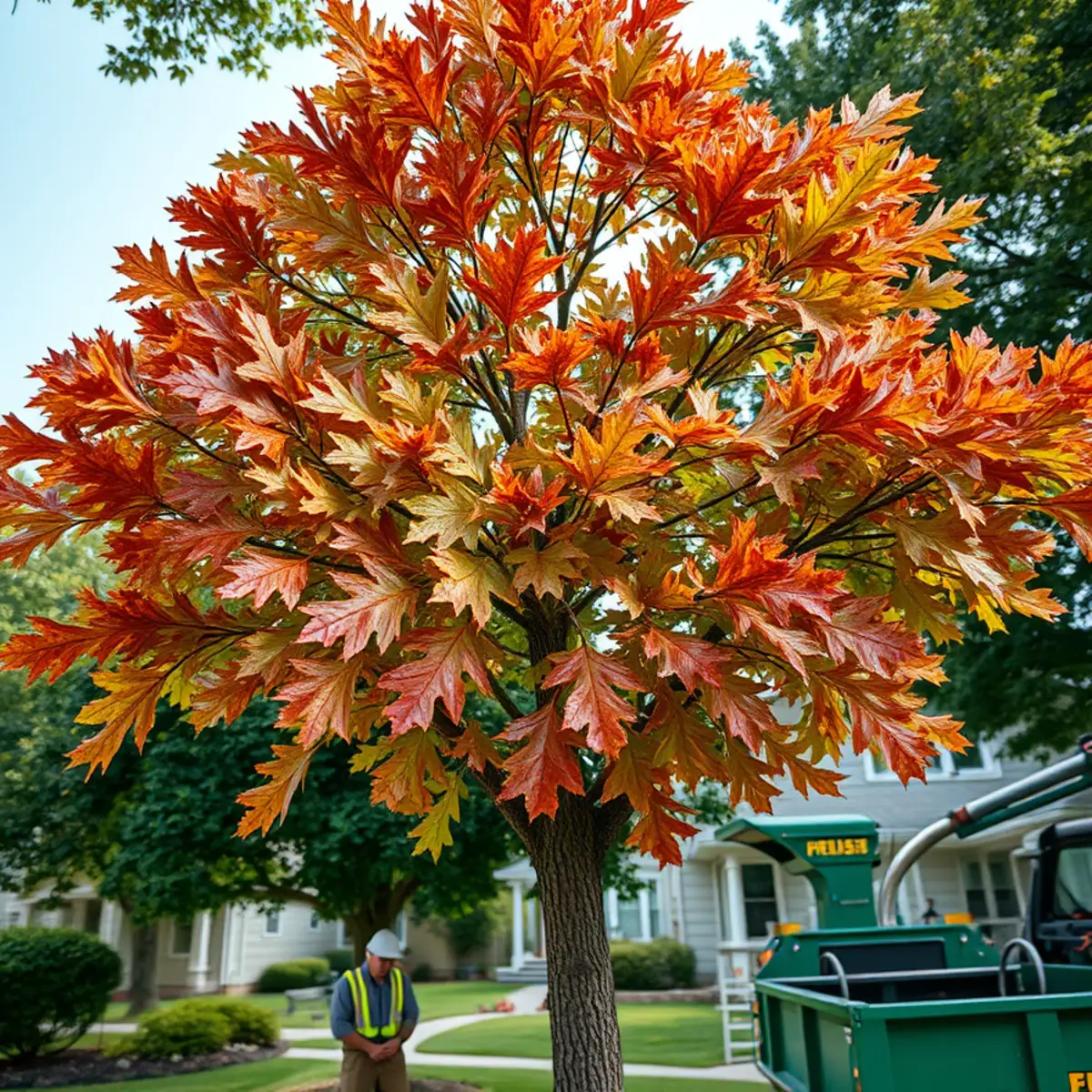
Oak wilt is the fastest tree killer we see in Mid-Michigan. A red oak can leaf out green and full in May and be bare and dead by August. If you've noticed leaves browning at the top of an oak and dropping in the middle of summer, don't sit on it — this disease moves tree to tree, and every week counts.
We've walked plenty of yards where one sick oak turned into three. Here's how to recognize oak wilt, why the calendar matters more than almost anything, and when a tree has to come down.
What Oak Wilt Actually Is
Oak wilt is a fungal disease. The fungus grows inside the tree's water-conducting vessels and plugs them up. The oak fights back by sealing off its own plumbing, and then it dies of thirst — from the top down, often shockingly fast.
It spreads two ways: overland by sap-feeding beetles, and underground through grafted roots. Understanding both is the key to stopping it.
Red oaks are in the most danger
Michigan's oaks fall into two camps. The red oak group — red, black, and pin oak, with pointed, bristle-tipped leaf lobes — gets hit hardest. A red oak can go from healthy to dead in a matter of weeks.
The white oak group — white, bur, and swamp white oak, with rounded lobes — is more resistant. These trees decline slower and sometimes survive.
Signs of Oak Wilt
Browning from the top down
This is the classic tell. Leaves at the top and outer edges of the canopy turn a dull bronze-green, then brown, working from the leaf tip and margins inward. It marches downward through the crown over days and weeks.
Summer leaf drop
Healthy oaks don't shed green leaves in July. If you're raking up green and half-brown leaves in the heat of summer, treat it as a warning.
Fungal mats and cracked bark
On red oaks, the fungus can form spore pads under the bark. They swell and crack the bark open, and give off a sweet, fruity smell that draws the very beetles that spread the disease.
Streaking in the sapwood
Peel back the bark on a wilting branch and you'll often see brown or greenish streaks in the wood just underneath. That's the vascular system clogging up.
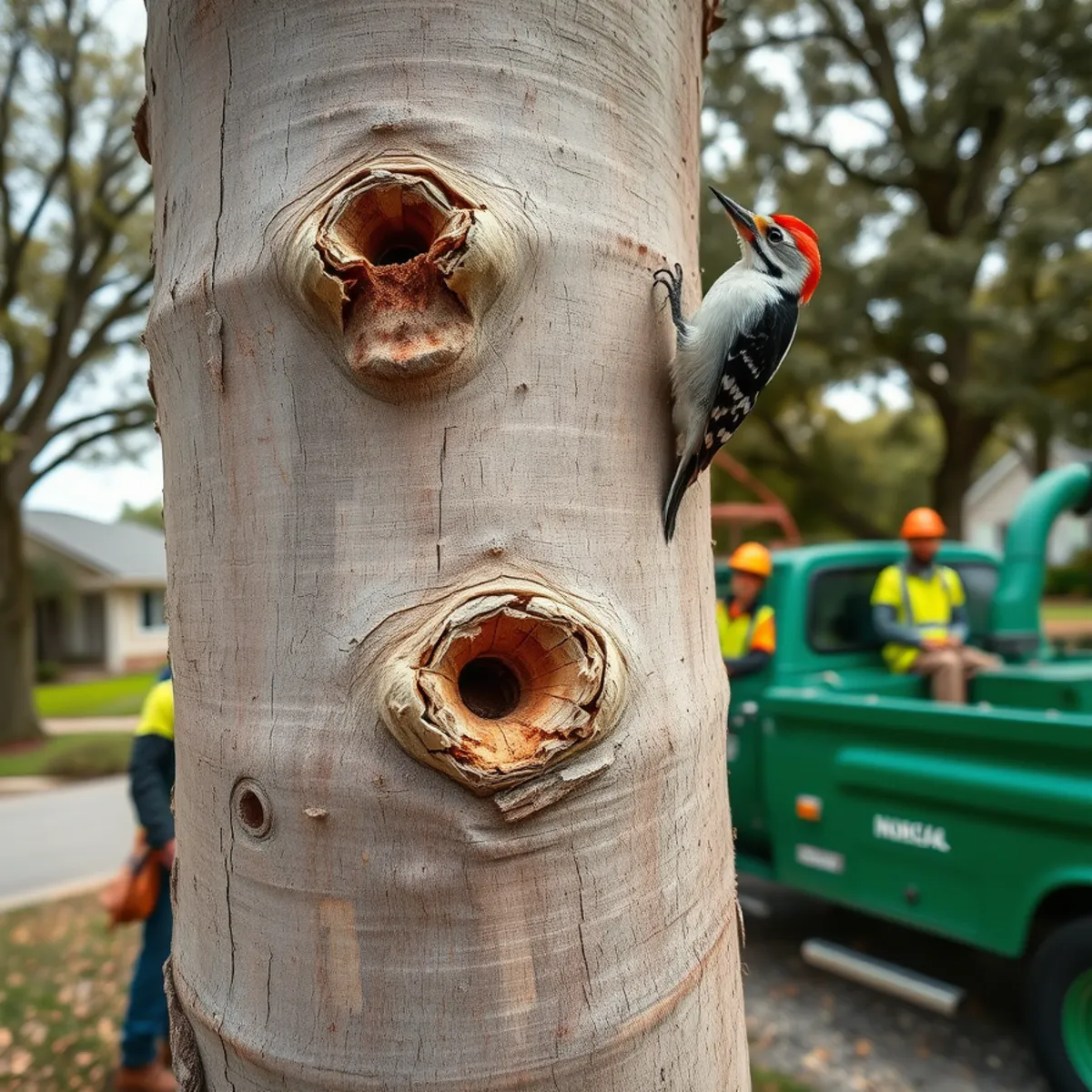
If a canopy is thinning from the top but you're also seeing D-shaped holes and woodpecker damage on the trunk, you may be looking at emerald ash borer on an ash tree instead — a different problem with a different fix.
Why Timing Is Everything
Sap beetles move it overland
Fresh cuts and wounds ooze sap in spring and summer. Sap beetles carrying fungal spores are drawn to that sap and infect the wound. That single fact drives the most important rule in oak care.
Root grafts move it underground
Oaks growing near each other fuse their roots below ground. Once one tree is infected, the fungus travels root to root into its neighbors. That's why oak wilt shows up as an expanding pocket of dead trees rather than one random casualty.
The pruning rule every Michigan homeowner should know
Only prune oaks between November and March, when the beetles are inactive and the tree isn't moving sap. December through February is safest. Never prune an oak from April through October if you can avoid it.
If a storm tears a limb off an oak in summer, that's the one time we tell people to paint the wound — cover it right away with pruning sealer to hide it from beetles. For everything else, timing does the work. Our crew handles dormant-season oak trimming and pruning on the right schedule so you're not gambling with the calendar.
How to Prevent Oak Wilt
- Prune oaks only in the dormant season, November through March.
- If an oak is wounded in the growing season, paint the wound immediately.
- Don't move or store red oak firewood with the bark on — it can carry spore mats. Tarp it or debark it.
- Clean saws and tools between trees with alcohol or a bleach solution.
- Where an outbreak is active, severing root grafts by trenching between healthy and infected oaks can stop the underground spread.
Treatment and When Removal Is the Answer
Preventive injections
A high-value white oak that isn't yet infected but sits near an outbreak can sometimes be protected with a fungicide injected by a professional as part of ongoing tree disease and pest treatment. It's a preventive tool, not a cure for an already-infected red oak.
Severing root grafts
Trenching four to five feet deep between trees cuts the underground bridge the fungus travels. It's disruptive, but it's effective when done before the disease jumps to the next tree.
Removal
Here's the hard truth: an infected red oak usually can't be saved, and leaving it standing puts every other oak on the block at risk. Prompt tree removal, handled so the wood doesn't spread spores, is often the smartest move for the health of your yard. In many cases we'll grind the stump too, so nothing is left to sprout or harbor the fungus.
Not sure whether you're looking at oak wilt, borer damage, or plain drought stress? That's worth a real diagnosis before you spend a dime on the wrong fix. Homeowners around Lansing and Okemos call us for exactly this — a straight answer about what's actually wrong.
Get Ahead of It
Oak wilt doesn't slow down, so neither should you. If you've got an oak dropping green leaves or browning from the top, call us at (208) 635-2100 for a free, no-obligation estimate. We're family-owned, licensed and insured, and we'll come out, tell you straight what's going on, and lay out your options.
Frequently asked questions
Tree service near you
Written by
Hayworth Tree Service