Eastern hemlocks are some of the most graceful trees in a Michigan yard — soft, feathery evergreens that hold their shape through winter. They're also under attack. A tiny insect called hemlock woolly adelgid has killed hemlocks by the millions across the eastern U.S., and it has a foothold in Michigan.
The good news: a hemlock you catch early can usually be saved. The trick is knowing what to look for before the tree starts thinning out.
What Hemlock Woolly Adelgid Is
Hemlock woolly adelgid (HWA) is a small aphid-like insect, no bigger than a pinhead. It settles at the base of the needles and feeds on the tree's stored energy, right where new growth comes from. That feeding starves the branch tips, and over a few seasons the whole tree can go into decline.
Only hemlocks are at risk. In Michigan that means eastern hemlock, whether it's a specimen tree in your landscape or part of a shaded, wooded lot.
How to Spot It
The white cottony masses
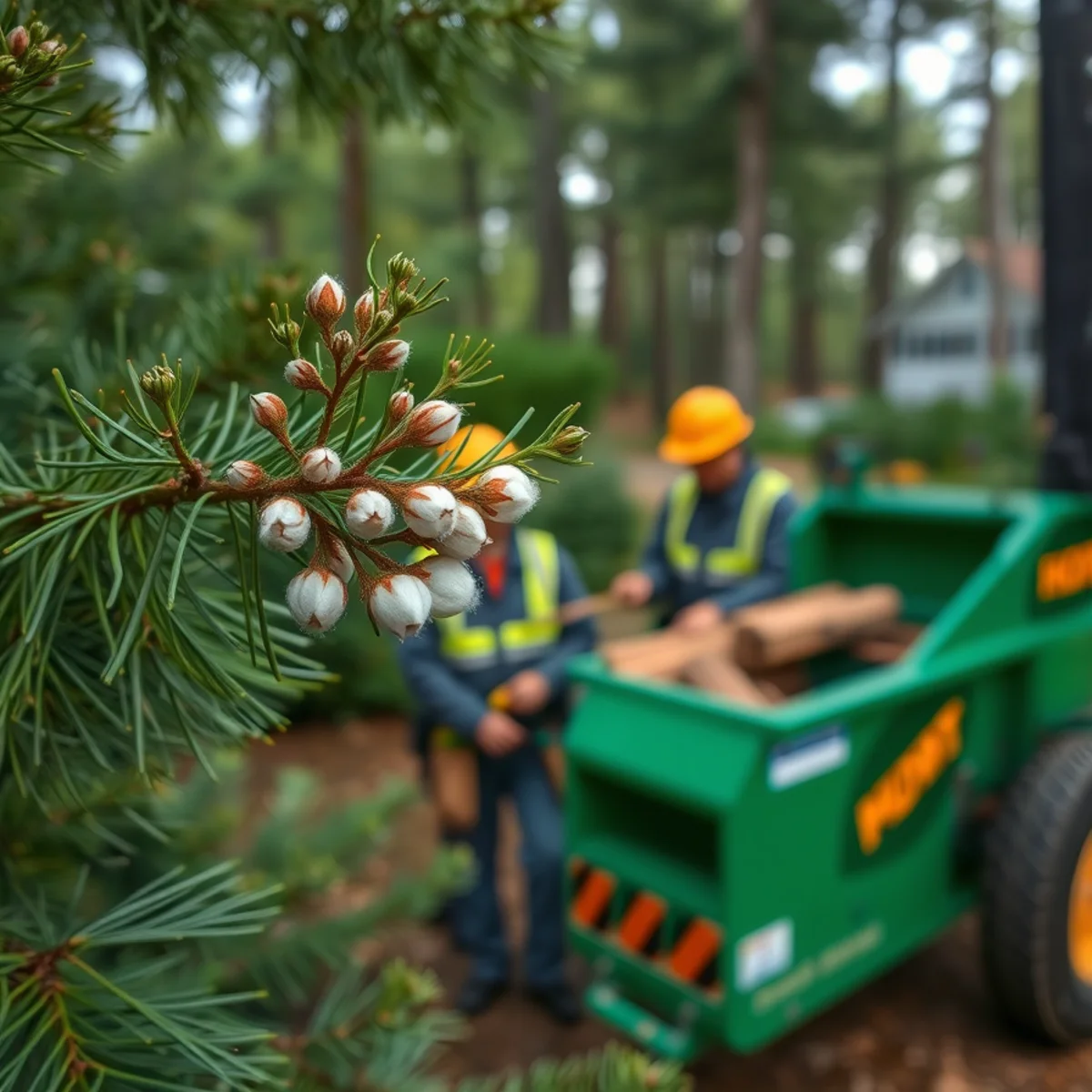
This is the giveaway. Turn over a hemlock branch and look at the underside of the twigs, right where each needle joins the stem. If the tree is infested, you'll see small round white masses that look like tufts of cotton or dots of snow. That woolly wax shields the insect and its eggs, and it stays visible from fall through spring.
Thinning, graying needles
As feeding takes its toll, needles turn a dull grayish-green and drop. The canopy thins, usually starting low and toward the interior, and branch tips begin to die back. New growth slows or stops.
Don't confuse it with normal cones or spittle
Hemlocks produce small cones, and other insects can leave frothy "spittle." HWA is different — dry, woolly, and clustered at the needle bases on the underside of the twig. When in doubt, get a set of experienced eyes on it.
How It Spreads
HWA can't fly. It moves on the wind, on birds and deer that brush past infested branches, and — the part you control — on cut hemlock branches and nursery stock people carry from place to place.
That's why Michigan restricts moving hemlock material out of affected areas. If you're pruning or removing a hemlock, it matters where that wood goes. Don't haul hemlock brush across the region, and check the current quarantine rules first.
Treatment: Saving an Infested Hemlock
A hemlock with most of its needles is very treatable. There are two main approaches, and often we combine them.
Horticultural oil and insecticidal soap
For smaller or accessible trees, a thorough spray of horticultural oil coats and smothers the insects. Coverage is everything — every branch, top and bottom — so it works best on trees a crew can reach completely.
Systemic insecticides
For larger hemlocks, a systemic insecticide applied as a soil drench or trunk injection moves up into the tree and protects it from the inside. It takes longer to act but gives longer-lasting protection, which is why it's the backbone of most treatment plans.
Getting the product and the timing right is the whole game. Our tree disease and pest treatment starts with an honest look at how far along the infestation is, then a plan matched to the size and health of your tree.
One caution: don't shear or heavily prune a stressed, infested hemlock. It's already fighting for energy, and hard pruning makes it worse. When some cleanup is genuinely needed, we handle careful trimming and pruning at the right time and keep the cut material out of the wind.
When a Hemlock Is Too Far Gone
If a hemlock has lost most of its needles and the branches are bare and brittle, treatment won't bring it back. A dead evergreen near the house or over a walkway becomes a hazard, and it can shelter more adelgid that drift to your healthy trees.
At that point, planned hemlock removal — with the wood handled responsibly — protects the rest of your landscape. We do this work for homeowners with wooded lots around Okemos and Haslett, where mature hemlocks are worth protecting and worth watching.
Keep Watching, Even After Treatment
Beating hemlock woolly adelgid isn't a one-time event. A treated hemlock still needs a look every year, because reinfestation from a neighbor's tree, a passing deer, or the wind is always possible. We usually recommend checking the underside of the branches each fall and again in spring, and re-treating on a schedule that fits how the tree is holding up and which method we used.
If you've got several hemlocks, watch them as a group. Adelgid rarely stays put on a single tree, so when we find it on one, we check the rest and plan protection for the healthy ones before they're overrun. Catching the second and third tree early — while they're still full and green — is far cheaper and far more likely to work than trying to rescue a whole stand that's already thinning.
Check Your Hemlocks This Winter
The best time to look is now, while the white masses stand out against dark green needles and bare branches. Catch HWA early and you can keep your hemlocks for decades. Miss it, and you may lose them.
If you've spotted cottony specks under your hemlock branches, call us at (208) 635-2100 for a free estimate. We're family-owned, licensed and insured, and we'll tell you straight whether your tree can be treated or needs to come down.
Frequently asked questions
Tree service near you
Written by
Hayworth Tree Service