Michigan winters are hard on trees. Ice storms coat every branch in glass, heavy lake-effect snow piles onto evergreens, and swinging temperatures crack bark wide open.
A little prep in the cold months keeps your trees standing when the weather turns rough. Here's how we help Mid-Michigan trees get through winter.
What winter actually does to trees
Ice: the heavyweight
Ice is the big one. A coating just a quarter to a half inch thick can add hundreds of pounds to a single limb. Brittle species and weak, V-shaped unions are the first to fail — and once one big limb goes, it often takes others down with it.
Heavy, wet snow
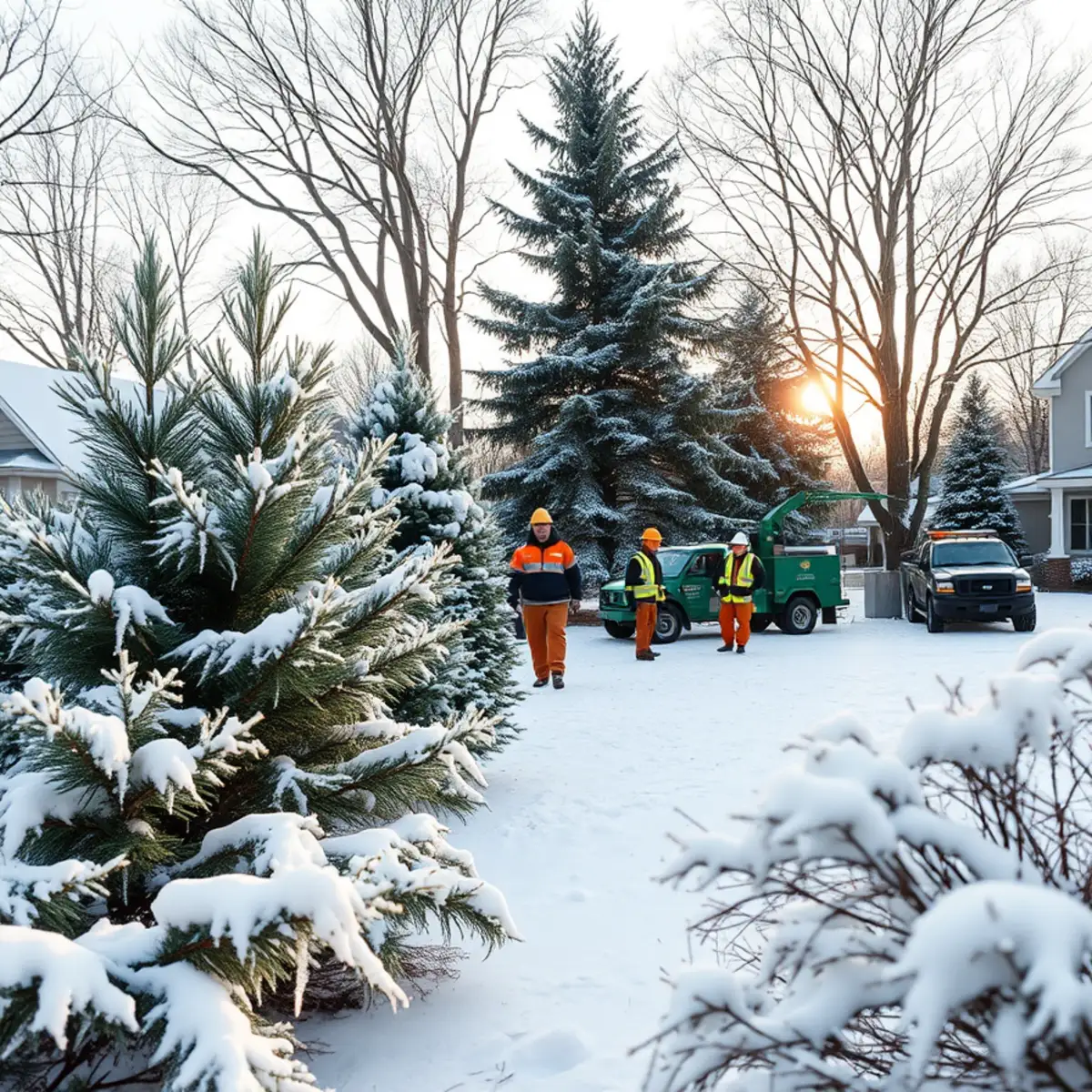
Wet, lake-effect snow loads down evergreen branches until they bend to the ground or snap. Blue spruce, white pine, and arborvitae take the brunt of it, and multi-stem trees like birch can splay apart under the weight.
Frost cracks and sunscald
On a sunny winter day, the bark on the south and west side of a trunk warms up. When the sun drops and the temperature crashes, that bark can split — a frost crack. Young, thin-barked trees like maple and fruit trees are the most vulnerable.
Salt and road spray
De-icing salt thrown up from the road or piled in shoveled snow can burn roots and foliage on trees near the driveway and street.
Before winter: get storm-ready
Prune out the weak stuff
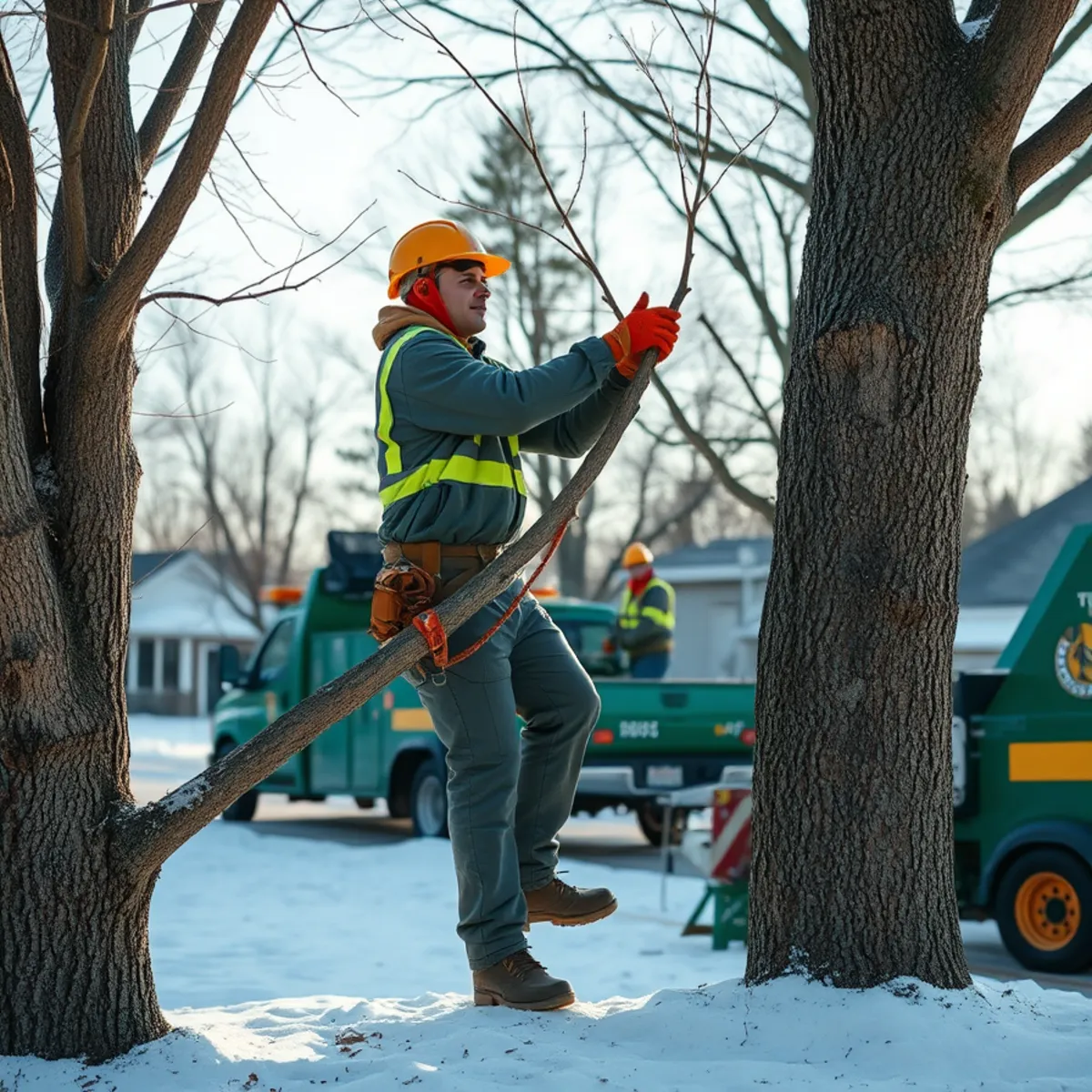
The single best thing you can do is take out the weak points before ice finds them. Dormant-season pruning clears deadwood, broken limbs, and over-extended branches so your trees carry a load better. This kind of structural pruning and thinning is exactly what winter-proofs a canopy.
Support the weak unions
Got a prized shade tree with two competing leaders or a tight, included-bark union? Those are the joints that split under ice. Cabling and bracing can add support and buy a valuable tree many more years. It's far cheaper than losing half the crown — or the whole tree.
Wrap young trees
Wrap the trunks of young, thin-barked trees in fall to guard against sunscald and frost cracks, then take the wrap off in spring so it doesn't trap moisture and pests.
Mulch and give one last deep drink
A few inches of mulch over the root zone insulates roots through the freeze-thaw cycles — keep it off the trunk. And water deeply before the ground freezes, evergreens especially, since they keep losing moisture all winter.
During winter: what to do (and not do)
Do gently clear heavy snow
After a heavy, wet snowfall, sweep the snow off evergreen and shrub branches with a broom, lifting up and out rather than pressing down. Get to it before the snow compacts and freezes in place.
Don't touch the ice
This one's counterintuitive: leave ice alone. Frozen wood is brittle, and banging or shaking a coated limb is a good way to snap it. Let ice melt off on its own time.
Do watch your leaners after a storm
Walk the yard after each storm. A tree with a new lean, or lifting soil around the base, may be starting to fail. Keep clear and get it looked at.
Don't bury the roots in salty snow
When you shovel or plow, try not to pile salt-laden snow onto the root zones of trees and shrubs along the drive.
When a winter storm does damage
Ice and heavy snow bring limbs down — sometimes whole trees. If a limb lands on your house, garage, or a power line, that's an emergency.
Stay well back from any downed wires and assume they're live. Don't try to cut a limb that's bent under load; that stored tension can whip back hard. Call for emergency tree service and let a crew with the right gear handle it. We respond fast to storm calls all winter long.
Don't forget the road salt
If your trees line the driveway or the street, winter salt is a quiet problem. Salt spray burns evergreen needles and buds on the side facing the road, and salty snowmelt soaks into the root zone, where it stresses the tree come spring.
You can't stop the plows, but you can help. Try not to pile shoveled, salted snow at the base of trees and shrubs. Use a plant-safe de-icer near your valued trees where you can. And give the root zone a good, deep flush of water in early spring to push built-up salt down past the roots.
When the thaw comes
The end of winter isn't the end of the risk. As the ground softens in the spring thaw, the soil loses its grip on the roots, and the first strong winds of the season can push over a tree that stood tall all winter. Walk the yard as things warm up, watch for new leans and lifted soil, and get any winter breakage cleaned up before it heals into a weak, awkward branch.
Michigan species to keep an eye on
- Evergreens under snow — spruce, pine, and arborvitae bend and break under wet loads.
- Silver maple and cottonwood — fast-grown, brittle wood that ice punishes.
- Birch and other multi-stem trees — prone to splaying apart under weight.
- Dead ash — trees already killed by emerald ash borer are extra dangerous once loaded with ice, and should come down before then.
Local, and ready when winter turns
We cover DeWitt, Grand Ledge, and the whole Capital region, and we've seen what our winters do. A little work now saves you a mess — and a much bigger bill — after the next ice storm.
Whether you want your trees pruned and storm-ready before the snow flies, or you've already got a limb down, we'll come out and take care of it. Hayworth Tree Service is family-owned, licensed and insured. Call us at (208) 635-2100 for a free, no-obligation estimate.
Frequently asked questions
Tree service near you
Written by
Hayworth Tree Service